The Editing of a video establishes the structure and content of the production, along with the production's overall mood, intensity, and tempo. Continuity editing relies upon matching screen direction, position, and temporal relations from shot to shot. Generally speaking, the continuity system aims to present a scene so that the editing is "invisible" (not consciously noticed by the viewer) and the viewer is never distracted by awkward jumps between shots or by any confusion about the spatial lay-out of the scene. Classical editing achieves a "smooth" and "seamless" style of NARRATION, both because of its conventionality (it is "invisible" in part because we are so used to it) and because it employs a number of powerful techniques designed to maximize a sense of spatial and temporal continuity.
180Degree rule: A key element of the continuity system is the 180 DEGREE RULE, which states that the camera must stay on only one side of the actions and objects in a scene. An invisible line, known as the 180 DEGREE LINE or AXIS OF ACTION, runs through the space of the scene.
Friday, 30 September 2011

Thursday, 22 September 2011
Theorist- Vladimir Yakovlevich Propp
.jpg)
Vladimir Yakovlevich Propp was born 17 April 1895 in St. Petersburg to a German family. He attended St. Petersburg University (1913–1918) majoring in Russian and German philosophy. Upon graduation he taught Russian and German at a secondary school and then became a college teacher of German. He died 22 August 1970. He was a Russian and Soviet formalist scholar who analyzed the basic plot components of Russian folk tales to identify their simplest narrative elements. Vladimir Propp developed a character theory for studying media texts and productions, which indicates that there were 7 broad character types in the 100 tales he analyzed, which could be applied to other media.
- The villain (struggles against the hero)
- The donor (prepares the hero or gives the hero some magical object)
- The (magical) helper (helps the hero in the quest)
- The princess (person the hero marries, often sought for during the narrative)
- Her father
- The dispatcher (character who makes the lack known and sends the hero off)
- The hero or victim/seeker hero, reacts to the donor, weds the princess
Propp's work was translated into English in the 1950s, by which time it had become core to the ideas of theorists such as Claude Lévi-Strauss and Roland Barthes, and was used in literary studies, anthropology and semiology. Propp's theories rely on 'good' and 'bad' characters. Propp has helped us to construct media personalities through the use of character roles which determined the general perception of any particular person. The theory of the same types of characters in different types of media is common however not used in everything. Many familiar programmes can be quickly viewed in terms of Propps theory, for example in some episodes of The Simpsons, Homer will be the hero, Marge the princess, Mr Burns the villain and other characters would act as donors/mentors or helpers. Sometimes films or television programmes will play with audience expectations, but usually you can clearly identify Propp’s character types. Putting Propp’s theory to music videos is a little more complex and can only really be used in narrative videos. In the Kill switch Engaged-Holy Diver video, the narrative is a very good way of putting the theory into action. You have a wicked wizard with evil dominions, the knight in shining armour, his horse and the damsel in distress (sleeping princess). Watching this video backs up the theory because the style and story of the fairy tale has been done many times before, especially in Disney films. In most narrative music videos the lead singer of the band is usually the hero, and in some videos the person with the most power e.g record label boss, ends up being the villain.
Source:http://en.wikipedia.org/wiki/Vladimir_Propp
Source:http://en.wikipedia.org/wiki/Vladimir_Propp
Music Video Analysis- Alestorm- "Shipwrecked"

 *Handout*
Alestorm-Shipwrecked
ALESTORM formed in 2006 and after gaining a cult following in their local scene, they quickly inked a record deal with Austria's Napalm Records. After a few line-up changes early on, the band eventually settled on their current swashbuckling crew comprising Christopher Bowes, Daniel Evans, Gareth Murdock, and Peter Alcorn.
The video shipwrecked was filmed in Belgrade, Serbia with director Ivan Colic, who has previously worked with EPICA, KAMELOT and KATAKLYSM. The song comes off the band's third album, "Back Through Time".
Commented ALESTORM frontman/keyboardist Christopher Bowes: "No expense was spared in the making of [the 'Shipwrecked' video], and I can confidently say that it's . . . the best damn music video ever. 'But how can you be so sure?' I hear you ask. Here's why: violin playing midgets! Hot medieval babes! Ridiculous CGI! Rampant alcohol abuse! All this and much, much more!"
*Script*
This music video is a mix between narrative and performance. The narrative links well with the meaning behind the lyrics of being stuck on an island and drinking lots of rum. Because of the style and genre of the band, I don’t think that the lyrics are meant to be taken seriously as the idea of a pirate metal band is quite humorous. However there could be some meaning behind the idea of being stranded which can mean that you feel you're feeling stuck or lacking support somehow in your real life. The simple lyric “Get drunk or die” is repeated often in the song and shown a lot in the video. The mass amount of drinking could be a way of Alestorm wanting to escape their troubles and forgetting about reality. The drinking also confuses the audience because we are unable to recognise if the events are real life or part of their imaginations. Performance is shown in this video as well as just having a narrative. Often, music videos will cut between a narrative and a performance of the song by the band. This is a popular form of music video, especially with rock bands. Sometimes, the artist (especially the singer) will be part of the story, acting as narrator and participant at the same time. But it is the lip synch close-up and the miming of playing instruments that remains at the heart of music videos, as if to assure us that the band really can perform well.
Intertextuality Visual reference in music video comes from a range of source, though the three most frequent are perhaps cinema, fashion and art photography. There is a woman character in this video who reminded me of the character Tia Dalma from the film Pirates of the Caribbean. This could show a possible influence for the band. It is perhaps not surprising that there are so many music videos that draw upon cinema as a starting point, since their directors are often film school graduates looking to move on eventually to the film industry itself. Not all audiences will necessarily spot the reference and this need not massively detract from their enjoyment of the media itself, but it is often argued that greater pleasure will be derived by those who know the reference and are somehow flattered by this
The fire used could represent the island as being a form of hell. The flames could also suggest that because of the pirate’s sinful life of pillaging, this will result of them ending up in hell.
This video uses a lot of varied camera angles, shots and a lot of styles of editing. Often enhancing the editing are digital effects which play with the original images to offer different kinds of enjoyment for the audience. The hectic guitars synchronise well with the choppy seas. Fast cuts are used and synchronise well with the beat of the music. A lot of jump cuts are used which adds energy to the video. The in the first few scenes of the video we see a pirate waking up with his head on the sand, it then cuts to what we believe to be a point of view shot which is blurred vision of a woman’s legs running. The cut of the legs mixed with a shot of a pirate midget playing the violin gives the video an abstract vibe. The general lighting of the island is light and bright which gives the island a representation of being a tropical paradise, with lots of women or “wenches” and rum all having a party which goes against the lyrics “Hey! You’re screwed and death is coming for you”
o This music video allows the audience access to the performer in a much greater range of ways than a stage performance could. Eye contact and facial gestures via the close up, role playing through the narrative and mise-en-scene will present the artist in a number of ways which would not be possible in a live concert. Pirates were the rock and roll stars of their time so mixing modern rock stars with Alestorm could be a way of attracting the female audience. The idea becomes more complex when we see the male body on display and we might raise questions about how the female viewer is invited to respond.
1. This video links well with Roland Barthes
Barthes was a French semiologist who identified 5 different codes by which a narrative engages the attention of the audience.
The enigma code- the audience is intrigued by the need to solve a problem- Is this real life or is the pirate imagining the whole thing.
The action code – the audience is excited by the need to resolve a problem- Is the pirate ever going to escape from the island?
The semantic code – the audience is directed towards an additional meaning by way of connotation- The woman on the island have knifes and appear to be more interested in money rather than the men.
The symbolic code – the audience assumes that a character dressed in black is evil or menacing and forms expectations of his/ her behaviour on this basis- The black around the woman’s eyes make them appear more sinister and that perhaps there more to them than meets the eye.
The cultural code – the audience derives meaning in a text from shared cultural knowledge about the way the world works- This is a very stereotypical pirate video set in what looks like the Caribbean. Throughout this video alcohol abuse and dangerous weapons are shown but people accept this because they are pirates.
Barthes was a French semiologist who identified 5 different codes by which a narrative engages the attention of the audience.
The enigma code- the audience is intrigued by the need to solve a problem- Is this real life or is the pirate imagining the whole thing.
The action code – the audience is excited by the need to resolve a problem- Is the pirate ever going to escape from the island?
The semantic code – the audience is directed towards an additional meaning by way of connotation- The woman on the island have knifes and appear to be more interested in money rather than the men.
The symbolic code – the audience assumes that a character dressed in black is evil or menacing and forms expectations of his/ her behaviour on this basis- The black around the woman’s eyes make them appear more sinister and that perhaps there more to them than meets the eye.
The cultural code – the audience derives meaning in a text from shared cultural knowledge about the way the world works- This is a very stereotypical pirate video set in what looks like the Caribbean. Throughout this video alcohol abuse and dangerous weapons are shown but people accept this because they are pirates.
Theodor Adornos theory of listeners and production, this video would fall under the production side because of the lack of thought to watching this video. The regress to childlike state “Infantilism”, relates with this video because pirates generally have a child appeal of being free and not working. This is an easy video to watch, almost a form of distraction and a novelty.
Todorov’s theory states that in a media text there are five stages.
ORIGINAL EQUILIBRIUM (normality) DISRUPTION RECOGNITION (of disruption) ATTEMPT TO RESTORE original equilibrium and NEW EQUILIBRIUM. This theory doesn’t work with this video because even though this is a narrative, there isn’t particularly a major plot so there is no disruption so there isn’t a reason to restore equilibrium. The only slight disruption is shown at the end when we realise that the pirate is actually trapped on the island.
1. Vladimir Propp developed a theory that within each narrative there are a set of stock characters, which reappear in every storyline.
These roles are:
Hero – Person on the quest
Princess – Prize for the hero
Helper – Helps the hero on his quest
False hero – Somebody who believes they are the hero
Dispatcher – Sends the hero on their quest
Father – Rewards the hero
Villain – Attempts to stop the hero on his quest
Donor – Provides objects to help the hero on his quest
These roles are:
Hero – Person on the quest
Princess – Prize for the hero
Helper – Helps the hero on his quest
False hero – Somebody who believes they are the hero
Dispatcher – Sends the hero on their quest
Father – Rewards the hero
Villain – Attempts to stop the hero on his quest
Donor – Provides objects to help the hero on his quest
Once again because of the lack of a solid storyline it is unclear who is what character and it can depend on what way you are looking at the characters. Most people see the bands as the hero’s in music videos. I personally see the female characters playing the roles of the villains because throughout the video they are distracting the pirates and stealing their money so could be classed as gold diggers.
Laura Mulvey and her theory argues that in classic hollywood films in particular women are merely represented to provide visual pleasure to men , and the audience is constructed in a manner where they are all expected to be men. This theory is used a lot in this video, nearly in every scene in fact there is a woman dancing. The men in this video are distracted by the dancing, hinted that the women are trying to seduce them. It is clear that this video is aimed at men because as a female watching it, I feel there is little about this video that may appeal to women. The first shot of a woman is of her legs and not her whole body, this way the men don’t feel intimidated. I think that without the support of the women dancing in this video then this video wouldn’t be as watched as it is, with 229,876 views on youtube.
This video gives the impression that the bands are to be taken seriously. If you were to compare Alestorm with Bullet for my valentine, they both fall under the metal genre, however Alestorms music videos are more humorous and the fact that they are a pirate metal band defiantly show that they want to be different. The overall effect of this video is that it can be simply viewed as a swashbuckling music video that is just fun. The style of the video compliments the song well because its singing about being trapped on an island and the video enhances its meaning, showing that just because you’re stranded on an island doesn’t mean you can’t have fun. This video was a good way to promote their new album “Back in Time” advertisements showed up at the start of the video and at the end. In fact I have actually bought their new album because I thought that they are really good and a interesting band.
Wednesday, 21 September 2011
History of music videos
In 1894, sheet music publishers Edward B. Marks and Joe Stern hired an electrician called George Thomas along with other various performers to promote sales of their song "The Little Lost Child". Using a magic lantern, Thomas projected a series of still images on a screen simultaneous to live performances. This would become a popular form of entertainment known as the illustrated song, the first step toward music video.
The earliest music videos or music promos were filmed in the mid 1950’s, however, before then, as early as the 1920’s, films by animators such as Oskar Fischinger were accompanied by musical scores labeld ‘visual music’.
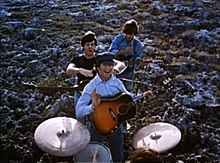
 Music videos are now becoming "Internet friendly", people are now watching videos on the internet on demand. Sites such as youtube count how many views a video has had, representing its popularity. Lady gaga's video for "Bad Romance" made headlines as youtubes most viewed video with over 350 million views in early 2011, however was over taken by Justin Beiber's song "Baby" with over 500 million views in early 2011.
Source: http://en.wikipedia.org/wiki/Music_video
The earliest music videos or music promos were filmed in the mid 1950’s, however, before then, as early as the 1920’s, films by animators such as Oskar Fischinger were accompanied by musical scores labeld ‘visual music’.
In 1940 , Walt Disney released Fantasia , an animated film based around famous pieces of classical music.

While the history of music videos goes back to advent of film and sound, it wasn't until the 60s when they were made with some sort of regularity. The 60s was the same decade that the beatles, came about along with other artists who started to use music videos as a form of promotion for various songs. The creation of promotional films continued into the Seventies, but it would not be until the success of a video shot for Queen's "Bohemian Rhapsody" that the record companies would start shooting videos for nearly every single they released. In the late Seventies interest in music videos had grown to the point that entire TV shows devoted to music videos were developed. By 1981 the growing interest in music videos resulted in the creation of MTV( Music Televison), the first cable channel devoted entirely to music videos, which turned out to be an enormous success and grow to become a huge phenomenon in the 80s. The long-running British TV show Top of the Pops began playing music videos in the late 1970s, although the BBC placed strict limits on the number of 'outsourced' videos TOTP could use. Therefore a good video would increase a song's sales as viewers hoped to see it again the following week. In December 1992, MTV began listing directors with the artist and song credits, reflecting the fact that music videos had increasingly become an auteur's medium. Directors such as Michel Gondry, Spike Jonze, Stéphane Sednaoui, Mark Romanek and Hype Williams all got their start around this time; all brought a unique vision and style to the videos they directed.
 Music videos are now becoming "Internet friendly", people are now watching videos on the internet on demand. Sites such as youtube count how many views a video has had, representing its popularity. Lady gaga's video for "Bad Romance" made headlines as youtubes most viewed video with over 350 million views in early 2011, however was over taken by Justin Beiber's song "Baby" with over 500 million views in early 2011.
Source: http://en.wikipedia.org/wiki/Music_video
Introduction to music videos
Music Video:
A music video is a short film using imagery mixed with audio music. Modern music videos are predominantly used for promotional purpose for the band/artist. There are different types of filming styles used in a music video such as, abstract, narrative, performance (live shows) and animation. The key elements to a music video are the lyrics: suggests general mood or feeling or sense of subject matter. Key lines play a part in the visuals but music video, rarely, illustrates the lyrics as a whole. The music/song: This gives the video the tempo of how the video will be edited. Most common editing is fast-cut montage. Others use slow-paced editing to establish mood, usually for solo artists with a broad audience appeal (e.g. Dido & Celine Dion). The genre: Different genres follows different forms and conventions, mise-en-scene, themes, performance, camera and editing styles of music video, i.e. Rock music videos tend to show performance of live shows.
Subscribe to:
Comments (Atom)